Thursday, December 3, 2015

Beware of Prim-N-Proper Spirituality

TITLE: BEWARE OF PRIM-N-PROPER SPIRITUALITY
SCRIPTURE:Luke 16: 1-15
Written by: Dr Conrade Yap
Date:December 3rd, 2015

8“The master commended the dishonest manager because he had acted shrewdly. For the people of this world are more shrewd in dealing with their own kind than are the people of the light. 9I tell you, use worldly wealth to gain friends for yourselves, so that when it is gone, you will be welcomed into eternal dwellings.

One of the most intriguing parables of Jesus has to be the Parable of the Shrewd Manager. In that story, Jesus told his disciples about a rich man who had decided to terminate the services of someone he hired. The NIV describes this "someone" as the “Shrewd Manager.” This shrewd manager had heard about his impending dismissal. Worried about his future, he went ahead to do something rather unthinkable. Calling in each of his master’s debtors, he went ahead to give his own version of Black Friday sales. For the first debtor who owed 450 gallons of olive oil, the manager dished out a 50% discount. For the second debtor who owed 1000 bushels (about 30 tons) of wheat, he immediately offered a 20% discount. Other than these two debtors, there were no mention of other such deals but it is safe to assume that these two examples reflect what he had done to the rest. The Shrewd Manager was offering a Great Middle-Eastern Sale of the Century!

For those of us familiar with earthly sensitivities and the need for right ethical behavior, this story should rub us on the wrong side in at least three ways.

A) Damaging Profitability

First off, how can we ever justify giving huge discounts without consulting our superiors? In the service sectors, anything out of the ordinary require the approval or signature of the next line of authority. Over at the Starbucks counter, if there is a dispute, or when the customer asks for something out of the ordinary, a common strategy is for the barista to consult his or her manager in charge. Whether it is giving out discounts or providing additional features at a lower cost, the employee usually does not have the authority to go beyond his/her duty. When we go to the bank, a withdrawal exceeding a certain amount would require additional levels of clearance from the branch’s supervisors. From airports to supermarkets; car sales offices to corporate deals, getting approvals to give deep discounts are needed. Last week was US Thanksgiving, followed by the traditional mad rush to go shopping after the Turkey dinner. Across the United States, people would hop onto their vehicles to rush to the malls or department stores for the post-Thanksgiving event: Black Friday. The word “Black” is used to describe the dark midnight hour where businesses like Walmart, Target, Sears, Nordstrom, etc would open their doors at the stroke of midnight to give shoppers a magical night of discounts galore. It has become an annual affair where people would fight over goods at Walmart and other popular discount stores.

(Photo credit: dailymail.co.uk)

Thursday, November 26, 2015

Why I Still Prefer Printed Bibles

TITLE: WHY I STILL PREFER PRINTED BIBLES
SCRIPTURE: Isaiah 40:6-8
Written by: Dr Conrade Yap
Date: 26 November 2015

6A voice says, “Cry!”
And I said, “What shall I cry?”
All flesh is grass,
and all its beauty is like the flower of the field.
7The grass withers, the flower fades
when the breath of the LORD blows on it;
surely the people are grass.
8The grass withers, the flower fades,
but the word of our God will stand forever. (Isaiah 40:6-8, ESV)

(Picture Credit: aachristian.wordpress.com)
There was a time when people bring their printed Bibles to Church, to Bible studies, to conferences, seminars, and Church events. On Sundays, whether they are on public buses, community vans, or personal vehicles, they could be seen carrying a printed book on one hand. Whether they are carrying bulky study Bibles in their colourful hardcovers; large ones in beautiful leather jackets; or pocket-sized ones that can easily fit into a ladies bag; people going to Church were easily recognizable. In Bible study classes, some eager believers would even bring more than one Bible translation. Some carry with them interlinear types while others would have bilingual Bibles to aid their reading. With a Bible, a notepad, and a pen, the individual would be all set to write notes.

Not anymore.

Times have changed. Instead of printed Bibles, most people carry pocket-sized cell phones. Whether it is an aging palm-sized iPhone 4S or the larger screen Samsung Galaxies; Kindle Fires or the Android 10” tablets; there is a new revolution in the way people read Bibles. With a swish left, they can move forward page, a chapter, or a book. With a swipe right, they can page backward. Using fingers to magnify or to shrink the words, it is a technological wonder on how we have the whole Word in our hands, ready to be manipulated according to our eyes. Sometimes, it seems like the attraction is not the Bible but distractions of other things.

A) Distractions
Distractions like the brightness and look of the screens. Where is the elusive setting to control brightness? How can the fonts be made a little bigger? What version do I want to open? Which Bible app should I use? There are the free ones like YouBible; the Zondervan BibleGateway app; the Logos Bible app;  the Olive Tree Bible; the eBible; the GloBible; etc. Some of these require an active Internet connection in order to browse to our favourite versions. Unless of course, we pay a small fee to download some pretty good electronic Bibles such as the Tecarta (Android/iOS) and the NeuBible (iOS).

There is the distraction of seeing another person’s digital device looking more cool than ours. “Hey! Is that the latest iPhone 6S you’re using?

There is the distraction of pop-ups, emails, and Whatsapp messages that appear on our cell phones.  Hey! I really need to respond to my boss. Just gimme a second.

Meanwhile, the Bible reading progresses from person to person until someone says: “Where are we now?” This person had been lost trying to navigate the Bible on his own tablet. There were times in which I simply pass my own Bible to the person struggling to read from his own phone.

There is a change in the way we do Bible studies now. So what I do is to print out the entire passage for the group. Every single person gets the same Bible passage, the same Bible translation, and being on the same page. Literally and metaphorically. Literally, we all have a better following as the person reads the Bible and the rest of us follow accurately the verses read, the pages flipped, and the thoughts synchronized. Metaphorically, we are all following the journey through the same passage and studying the contexts together.

Having all on the same page is important for a Bible study environment. If not, we can easily go off tangent on other matters. A careless flip or an innocent tab on our tablets can launch us to a whole new app or page, leaving us behind from the rest of the group. Or when our phones go black to conserve energy, forcing us to look for the power button to get back on track. Worse, when we spend more time trying to navigate our eBibles, we subconsciously lose the train of thought by the person sharing about the Bible verses.

Wednesday, November 18, 2015

To Welcome or Not to Welcome?

TITLE: TO WELCOME OR NOT TO WELCOME?
SCRIPTURE: 1 John 4:18
Written by: Dr Conrade Yap
Date: 18 November 2015

18There is no fear in love. But perfect love drives out fear, because fear has to do with punishment. The one who fears is not made perfect in love." (1 John 4:18)

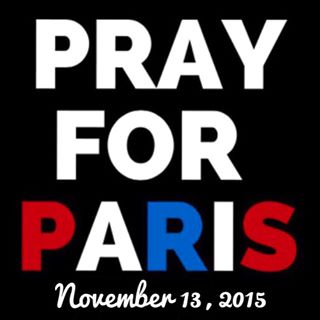
The Paris attacks last week easily consume the front pages of most major dailies around the world. With sensational reporting and graphic pictures, followed by commentaries and opinion pieces, everyone have heard at least something about it: Terrorism in France.

Hundreds of people died, mostly French. By targeting at key popular spots such as soccer stadiums, restaurants, cafes, concert halls, etc, the objective of the co-ordinated attacks is to instill fear and a sense of insecurity among the people. It has partial success. As Parisians grapple with a world that would never be the same again, they realize that safety and security cannot be taken for granted. Flowing tears of grief are mixed with growing fears of new threats that could come anytime, anywhere, and to anyone. These fears resulted in more counter-terrorist actions. The next day, France launched one of the largest assaults at terrorist targets in war-torn Syria. Today, anti-terrorist forces continued their hunt for the masterminds of last Friday's attacks. As world leaders and community groups come together to pray for France, social media is filled with notes of love with #PrayForParis.

At the France-England friendly soccer match yesterday, although England won 2-0, the result did not matter. The highlight was not the soccer game but the events before the game. United as one people, both French and English national anthems were sung by all in the stadium, including a sizeable number of French in the crowds. It is a show of unity and defiance against terror, saying that good will always triumph over evil. Everywhere we go, we see the French flag colours of red, white, and blue across monuments, buildings, and public events. The social media titan, Facebook has even made it easier for users to create French coloured backgrounds for them to express their sharing of grief and their solidarity with the French people.


Wednesday, November 11, 2015

Remembrance Day 2015

TITLE: REMEMBRANCE DAY 2015
SCRIPTURE: Deuteronomy 4:9
Written by: Dr Conrade Yap
Date: November 11th, 2015.

"Only be careful, and watch yourselves closely so that you do not forget the things your eyes have seen or let them fade from your heart as long as you live. Teach them to your children and to their children after them." (Deut 4:9)

It is Remembrance Day today. At 11:11am local time, on November 11th each year, many people observe a minute of silence to remember several things. They remember the terrible consequences of war where many young men died in the battlefield. Whether the nations are victorious or not, right or wrong, young or old, young lives are lost. Husbands, fathers, professionals, students, workers, and young males from all walks of life fought in the terrible wars. In World War I, nearly ten million soldiers from all sides died, together with more than 7 million civilians. All the major countries of the world were involved from East to West. In World War II, the numbers jumped up to more than 85 million casualties of war. Even today, many wars are still been fought in places like the Middle East, Eastern Europe, Asia, and the Americas.


Wednesday, October 28, 2015

"What's the Point?" or "Where is Christ?" (On Expository Preaching)

TITLE: WHAT'S THE POINT or WHERE IS CHRIST?
SCRIPTURE: Psalm 19:14
Written by: Dr Conrade Yap
Date: October 28th, 2015
May these words of my mouth and the meditation of my heart be pleasing in Your sight, LORD, my Rock and my Redeemer (Psalm 19:14)

Week after week, pastors prepare sermons. They spend time working through the biblical text. Those with knowledge of Greek and Hebrew go deep into the original wording and contexts. Others use the resources like the Bible study helps; commentaries; Bible concordances; and dictionaries; available to help them understand the ancient contexts. Good preachers will take more time to read the text meditatively, letting the Word speak to their hearts prior to doing anything else. If the Word has not touched the preacher, whatever that comes out of the preacher is usually more about the preacher rather than the Word.

Doing it week after week is tough. At times, preachers are tempted to just depend on the insights of others, put a few interesting stories or illustrations together, and then preach a sermon based on knowledge and other people’s advice. Like processed food, such sermons are like high-sugar calories that rather than solid food that strengthens the soul. The former puffs one up for a while before one begins to ask: “What’s the sermon point(s)?” It makes one wonder about the things said. When a sermon starts to look like spiritual advice, it is the beginning of the end for expository preaching.

I hear the question quite regularly when members ask: “What’s the point today?” Whether it was a regular preacher or a guest speaker, sometimes this question would pop up among believers having an after-sermon discussion, a lunch get-together, or an online interaction. Most times, people would just go about with their other activities, having heard the sermon, and feeling somewhat contented about checking off one item on the Sunday to-do list. In the meantime, the pastor had to reflect on his delivery and his content. Sometimes he would get brickbats from those who are offended by certain parts of the sermon. Other times, he would receive lots of verbal pleasantries like “Great sermon!” or “Thanks for the important message.”

The tragedy is not when a sermon is "boring."
The tragedy is when Christ is not preached.
Indeed, the mark of a great sermon is not about leaving in the minds of people, “What’s the point today” but to have people exclaiming: “I have encountered Jesus today!” This is what good expository preaching can do. It brings out the Word of God in a manner that glorifies Christ. The sad thing in today's churches is that we try to make things interesting for the audiences. We try our hand at entertainment. We pick illustrations that thrill. We add so much calories and unhealthy literary cholesterol that are worldly that we miss out on the pure spiritual food we need: Jesus Christ Himself. Preachers, please don’t be afraid to be “boring” in the sense that you are always preaching the same point: Jesus Christ. Preaching that is not about Christ and centered on Jesus is no preaching at all. Preachers must preach Christ, and not dispense spiritual advice.The tragedy is not when a sermon is deemed "boring." The tragedy is when Christ is not preached.

What is expository preaching?

Thursday, October 22, 2015

Expose Not Blind: On the CHC Verdict

TITLE: EXPOSE NOT BLIND: ON THE CHC VERDICT
SCRIPTURE: John 8:1-11
Written by: Dr Conrade Yap
Date: October 23rd, 2015.

But when they persisted in asking Him, He straightened up, and said to them, “He who is without sin among you, let him be the first to throw a stone at her.” (John 8:7)
NOTE: This is a special edition of Sabbath Walk written in response to the wide interest surrounding the recent court judgment of the controversial use of funds for a music ministry outreach arm of a Church. It is a matter of both public and theological interest. In this article, I argue that as lights of this world, our calling is to expose the darkness and wrongs of this world, but not to make people blind with our glares of justice and self-righteous stares. The condition of the soul can only be touched by the Holy Spirit. 


Swirling around the minds of many in Singapore is the thought of judgment day. On October 21st, 2015, the judge of the widely followed trial of six leaders at City Harvest megachurch wrote:
I am satisfied that six accused persons are guilty of all the charges against them.”
Is this “satisfied” one of glee that spouts out “You deserved it!” or “I told you so?” No.

Is this “satisfied” something like a hungry diner completing his fifth round of food at a buffet table? No.

This “satisfied” is essentially made on legal grounds, after all the evidence presented by the prosecution before the Judge have been duly considered and deemed overwhelmingly satisfactory for conviction. There is nothing personal even though everyone in the court room would have a personal opinion. On the part of the judge, I believe that there is no intent to gorge oneself on Schadenfreude, unlike some observers who loved to watch the prey being ravished by predators. It is purely and simply a legal matter, albeit with lots of public interest.


Wednesday, October 21, 2015

After the Election

TITLE: AFTER THE ELECTION
SCRIPTURE: Mark 12:28-31
Written by: Dr Conrade Yap
Date: October 20th, 2015

28One of the teachers of the law came and heard them debating. Noticing that Jesus had given them a good answer, he asked him, “Of all the commandments, which is the most important?

29“The most important one,” answered Jesus, “is this: ‘Hear, O Israel: The Lord our God, the Lord is one. 30Love the Lord your God with all your heart and with all your soul and with all your mind and with all your strength.’ 31The second is this: ‘Love your neighbor as yourself.’ There is no commandment greater than these.

It has been a long 78-day campaigning. For more than two months, different parties not only highlight their political manifesto, they paint negative images of their opponents. With rising discontent about the existing Federal government leadership in Ottawa, a lot of people have been making loud noises to replace the Conservative government, especially the former Prime Minister, Stephen Harper. Last week, when I was driving along Cambie Street and Broadway, at each corner of the busy intersection were individuals wearing placards that said: "Harper Out!" Evidently, Harper must have stepped on the tails of many people. Perhaps, it was his style of government or policies implemented. Maybe, it was the way he carried himself. Whatever it is, he is no longer Prime Minister. Effectively yesterday, he has resigned from his Conservative Party leadership. The people of Canada have spoken. A new government has been elected and the new Prime Minister-Elect will be Justin Trudeau, the one that Harper has constantly called out: "He's not ready."

“Canada is a country strong not in spite of our 
differences but because of them.” (Justin Trudeau)
The voices of Canadians have been loud and clear. They want a new party and a new Prime Minister, anything but conservatives; anything but Harper; anything but the status quo.  As of yesterday, the Liberal Party has become the majority government of Canada. Stephen Harper is out and Justin Trudeau is in. The majority of Canadians have voted for change. Many people celebrated through the night. Justin Trudeau gave a rousing and conciliatory victory speech. Today, he even surprised many commuters at a downtown Montreal subway station. You can watch the video here. Amid the celebrations, I hear sadness as well. The NDP leader, Tom Mulcair looked dejected as he conceded defeat in Montreal. Stephen Harper too pledged to work with the incoming party in his gracious speech over at Calgary. The question for this week is this: What about those who didn't vote for the Liberals?

Politics will always be a heated and controversial subject. After the elections, there will always be more than one emotions. Winners will feel exhilarated. Losers may be exasperated. Everyone would be exhausted to some degree. As I talk to people, in general, people are happy, most not because Liberal is the perfect choice, but because the Conservatives have been perceived so negatively. Just like the campaigners on Cambie Street that day, people are more happy about deposing and getting rid of Stephen Harper more than anything else. That in a way is sad. Why so much animosity for a person who had spent ten years leading the country? Why talk about him as if he is the enemy of Canada? Why demonize him as if he is utterly evil? Even Justin Trudeau recognized that sentiment when he said the following during his election speech:

"Conservatives are not our enemies. They are our neighbours."


Tuesday, October 13, 2015

Gospel-Led Living

TITLE: GOSPEL-LED LIVING
SCRIPTURE: Ephesians 5:15-17
Written by: Dr Conrade Yap
Date: October 13th, 2015


"15Be very careful, then, how you live—not as unwise but as wise, 16making the most of every opportunity, because the days are evil. 17Therefore do not be foolish, but understand what the Lord’s will is." (Ephesians 5:15-17)


KEY THOUGHT: Gospel-Led living is not just for a small part of our lives. It is for ALL of our lives.

Busy. Not enough time. Too much to do. Familiar?

It is all too familiar. Whether one is working at a Full-time job or otherwise, being busy makes a typical adult person maintains feelings of fulfillment.  As long as I make the money for the family, I fulfill my financial obligation. As long as I spend time with my children, I fulfill my parental obligation. As long as I keep my hours in my office, I fulfill my employment obligations. As long as I serve in some capacity in Church, I fulfill my spiritual obligations.

What if something's gotta give? What if we spend more time in one at the expense of another? What if we totally miss out on an important obligation? Will our lives become less fulfilling?

Dietrich Bonhoeffer writes: "Every Christian must be fully Christian by bringing God into his whole life, not merely into some spiritual realm." This speaks into some people who separate the sacred from the secular, believing that they are only serving God when they are in churches or doing Bible related stuff.

This week, I like to share about productivity and how we can let the gospel drive our living. It is not about using the gospel to be better at our jobs. It is letting the gospel motivate us in our work. Christians do not just do good in the world. They do good in such a way that people notice God working in their lives. They serve faithfully not because they are obligated to. They serve because they loved to. We don't simply try to do our best to love our families. We love our families and are grateful every time we get to love our families. We serve in churches not because there is a desperate need for volunteers. We serve because it is an opportunity to exercise the gifts God has given us.

A) "Be very careful, then, how you live"

A gospel-led life begins with an awareness of our surroundings, where we are, the environment we are living in, and who we are with. If it is with lots of non-Christians around, be careful about the language we use. It is not appropriate to use "Christianese" which they don't understand. Avoid using words that only Church-people understand. Talk in everyday language but refrain from profanities we often hear in the office. If possible, show your displeasure when colleagues spout out vulgarities. At the same time, maintain a careful leash on the tongue, not to slander, not to spread rumours, and not to gossip about rumours. Even when one has the facts, do not be too quick to let loose. Be careful about how the words impact others. Speak the truth in love. A gospel-led life is not about reviving our prosperities but resetting our priorities.


Friday, October 2, 2015

Tempted to Deny Christ

TITLE: TEMPTED TO DENY CHRIST
SCRIPTURE: John 13:37-38
Written by: Dr Conrade Yap
Date: October 2nd, 2015
37Peter asked, “Lord, why can’t I follow you now? I will lay down my life for you.”
38Then Jesus answered, “Will you really lay down your life for me? Very truly I tell you, before the rooster crows, you will disown me three times!"

KEY POINT: How real is our faith? Will it survive the hard knocks of life? Or will it crumble under the first signs of trials?

In John 18, we see a dramatic and negative transformation of Peter, the famous disciple of Jesus. From someone who had the nerve to rebuke Jesus for speaking about his own dying (Matthew 16:22), to his bold physical defense against those trying to arrest Jesus (John 18:10), Peter is that kind of a shoot-first-worry-later kind of a guy. How is it possible for a guy who talks big on the outside but when the hard times come, deny Jesus. As modern readers, Peter's denial seems like a nice story to know about. What if the very trials and tribulations happen to us today?

Romans 1:16 (NIV)
Yesterday morning, another deadly shooting shooting occurred in America. This time, it happened at Umpqua Community College in Ten people were shot dead and another 7 injured. The gunman was eventually shot dead after a gunfight with police. From eyewitnesses, there are shocking news about how the shooter singled out Christians to be killed. According the reports, the gunman had a "disdain for religion" and in particular, Christianity. He reportedly asked:

"Are you a Christian? . .. Good. If you are a Christian, you are going to see God in just one second."

What followed was a horrendous act of violence where Christians were quickly shot on the head.  Those who said otherwise or stayed silent were shot on the legs. One teacher died immediately when shot on the head. Many were probably too stunned to know how to react. I wonder what I would have done if I was there. Probably, I'll be dead by now. Maybe, I won't as I might have rationalized the gunman as some deranged individual who was mentally unstable, and would not have taken his question seriously. Truth is, I really don't know. The whole situation can be extremely complex that there is no time to think of some rationalized answers. Incidentally, another recent shooting happened too in a Church in Charleston where black Christians were killed in cold blood. Some said it was racially driven. Others claimed it as another religiously motivated murder. Perhaps, there are elements of both race and religion.

What do we do when we are challenged to deny Christ?

I remember hearing a story of a few gunmen who entered a house Church in a persecuted country, asking believers in the Church to stand up. As the pastor stood up, along with a few other individuals in the congregation, the rest were then asked to leave. As the ones who stood got themselves ready for the worst to happen, the gunmen removed their masks and said to them: "Now we know who are the true believers of Christ, let us continue with worship." I am not sure how true the story is but it is a dramatized form of testing whether one's faith is genuine or not. When the trials and tests arrive, how many of us would pass the faith of test? Will we really lay down our lives for Christ?

I guess my readers would be split down the middle about this. There is no easy answer to such a situation. Stand up for Christ and be killed. Or we sit down by denying Christ and live for another day.

Peter failed the test. When the whole regimen of religious officials and Roman guards arrived to arrest Jesus, Peter and the rest of the disciples fled from the scene. John's gospel describes in vivid details how Peter denied any association with Jesus three times. At the third time, the rooster crowed and Peter wept like a baby.

Never say never.

In a book entitled "Killing Christians," author Tom Doyle has some rather dramatic statements to make about true Christians. He shares eight stories about how courageous believers live out their faith in lands of persecution.
"Sometimes survivors are unrecognizable even by their own families because, in the midst of their brutal affliction, they experienced Christ in an hour of need as few of us ever do. Persecuted believers have become the new face of genuine Christianity. They are filled with passion to live or die for Christ, and we in the West have much to learn from them." (Tom Doyle, Killing Christians, Nashville, TN: W Publishing Group, 2015, xii)
When persecutions come, when the temptations to deny Christ arrive, how would we fare? In a comfortable West where convenience trump conviction; where shallow belief is preferred over deep matters of faith; where empty words speak louder than solid allegiance to Christ, it is hard to determine who are the genuine believers among us. Maybe, there is no better way than to have fires and hardships to sieve us out. Tests of faith are not there to make life difficult for us. They separate the sheep from the goats. They determine the faithful from the faithless. They pointedly asked: "Are you for God or against God?"  There is no middle ground as far as faith is concerned. It is either we believe or not believe. Choosing to withhold our beliefs is already a statement against belief. Until we decisively make the choice to believe.

We are all easily tempted. As long as we live in this world, there is no way we can run away from tests and trials. What we can do however, is to prepare for it. Like the parable of the Ten Virgins, we can keep our levels of faith at maximum level at all times by learning to keep to the basic spiritual disciplines of faith. Like the call to maintain Christian Fellowship in Hebrews 10:24-25, we can maintain godly community by faithfulness in our commitments to one another. We can make it a point to be regular at our group meetings REGARDLESS of how busy we are or how tired we may be at the end of the day. For if we succumb to the busyness of life and the exhaustion of the day during good times, we would collapse quickly like a house of cards when trials and tribulations come.  United we stand. Divided we fall. When the trials and tribulations arrive, will your faith stand?

That is the question that we can only answer for ourselves.

THOUGHT: "No healthy Christian ever chooses suffering; he chooses God's will, as Jesus did, whether it means suffering or not." (Oswald Chambers)

sabbathwalk

Copyright by SabbathWalk. This devotional is sent to you free of charge. If you feel blessed or ministered to by SabbathWalk weekly devotionals, feel free to forward to friends, or to invite them to subscribe online at http://blog.sabbathwalk.org . You can also send me an email at cyap@sabbathwalk.org for comments or inquiries. Note that views expressed are personal opinions of the author and do not necessarily represent the views of any person(s) or organization(s).

Monday, September 28, 2015

Humility in Service

TITLE: HUMILITY IN SERVICE
SCRIPTURE: Ephesians 4:2-3
Written by: Dr Conrade Yap
Date: Sep 27th, 2015

"2Be completely humble and gentle; be patient, bearing with one another in love. 3Make every effort to keep the unity of the Spirit through the bond of peace." (Ephesians 4:2-3)
Is it possible to be completely humble? Given our imperfect selves and our natural tendency to be prideful, how then can we ever follow through on Paul's call for us to be humble?

My quick answer: We can't. Not on our own strength that is.

(Credit: ThorstenConsulting)
Humility has been promoted highly at all kinds of leadership conferences. Gurus trumpet it. Writers publish volumes about it. Pastors and preachers regularly mention it over the pulpit. The trouble with humility is that it is elusive and quite difficult to achieve directly. It is an attribute that can only be seen indirectly through various means. The humble will deny he is humble in the first place. The one who claims he is humble is already on the track of pride and arrogance. This is one of life's irony. The more we want something directly, the less we get it. It is like romantic love where a man pursues a girl, only to find the girl running away from him. The moment the man stops pursuing, stops harassing the girl, and begins to do good works to others, the girl would stop running. She would turn around and with piqued interest, find ways to connect with this "nice man." If humility is that desired damsel, we cannot be too overpowering in our pursuit. We need to take a step back and check our own hearts.
  • Am I seeking humility for my own sake or for others?
  • Am I seeking to be humble in order to gain someone or something for self gratification?
  • Am I seeking the humble route because I want to honour Someone?

According to Professor John Dickson of Macquarie University, humility is defined as follows:
"Humility is the noble choice to forgo your status, deploy your resources or use your influence for the good of others before yourself. More simply, you could say the humble person is marked by a willingness to hold power in service of others." (John Dickson, Humilitas, Zondervan, 2011, p24)
In other words, humility comprises three elements: it presupposes the dignity of others; it is a choice; and it is self-deprecation for the sake of others.